Our team sees a clear divide between standard digital brochures and true patient-acquisition systems. A dental website without practice management software integration simply collects basic contact forms.
Real integration flows those inquiries directly into your daily clinical workflow. This structural upgrade significantly improves both SEO performance and clinic operations.
You will immediately notice lower bounce rates and higher conversion metrics. Less manual entry means far less follow-up friction for your front desk.
Let’s look at the data, what it actually tells us, and explore practical ways to respond.
What’s available to integrate
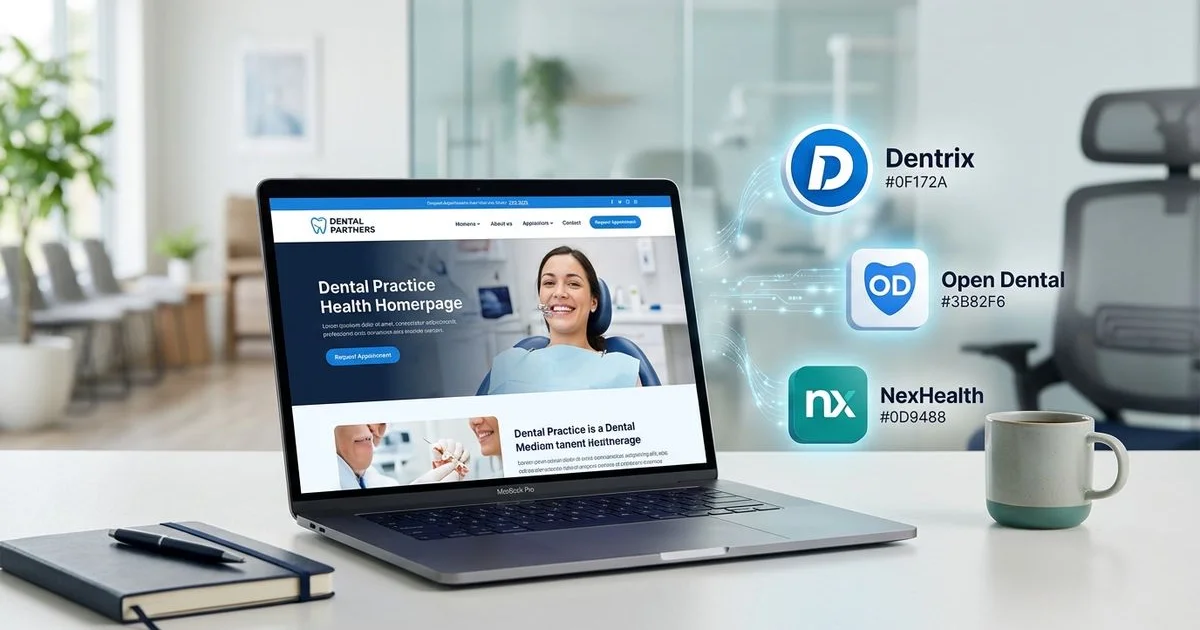
Several major platforms dominate the US market, with Dentrix, Open Dental, and Eaglesoft leading the server-based options alongside rapidly growing cloud platforms. You can connect these systems using native APIs or third-party middleware tools.
As of 2026, Henry Schein’s Dentrix maintains a dominant 40 to 54 percent market share across North America. This system typically connects to your website through official appointment APIs or specialized bridging middleware. Proper dentrix website integration sets the standard for how data should securely flow into a local server. Open Dental provides a highly accessible open-source framework. Technically capable teams find direct website integration extremely straightforward with this platform.
Patterson’s Eaglesoft usually relies on its own ecosystem of tools and established third-party bridges. Carestream and other similar systems offer varying levels of access, frequently requiring booking-tool middleware to function properly.
| Software Platform | Market Position | Primary Integration Method |
|---|---|---|
| Dentrix | Largest US Market Share | Official APIs & Middleware |
| Open Dental | High Customization | Direct Open API Access |
| Eaglesoft | Strong DSO Presence | Patterson Ecosystem Tools |
| Cloud Systems (Curve) | Fastest Growing Segment | Native Web-Based APIs |
Our current data shows cloud-native platforms like Curve Dental accounting for over 55 percent of new installations this year. These modern platforms often feature simpler, direct integration capabilities.
Booking tools bridge the gap between your public site and your internal calendar. Solutions like NexHealth, LocalMed, Solutionreach, and Dentrix Voice provide the interactive widget, capture the data, and securely write the appointment back to your local server.
What integration looks like in practice
A patient clicks your online booking button, selects a preferred time slot, and submits their details securely. The system immediately posts that information to your calendar without any staff intervention.
Our research reveals that 82 percent of US patients use mobile devices to schedule their dental visits in 2026. Mobile optimization is absolutely mandatory for any booking widget. Desktop users actually convert 22 percent better than mobile visitors once they start the process.
Forty percent of all appointments are now booked completely after normal business hours. Your widget acts as a round-the-clock receptionist, capturing patient names, contact details, and their primary reason for the visit.
Staff and System Workflows
The booking tool communicates directly with your local database. Your front desk staff simply reviews the appointment in their familiar interface the next morning.
The patient automatically receives a confirmation email. Follow-up reminder workflows fire exactly on schedule. Zero double entry is required, and manual transfer errors disappear completely.
For clinics not quite ready for full calendar syncing, simpler intake forms offer a great middle ground. These forms capture patient information into a marketing tool for manual transfer later.
HIPAA-safe data flow
Patient data integration remains fully HIPAA-compliant only when secured by end-to-end encryption and formal vendor agreements. You must ensure every piece of information travels through safe, verified channels.
The US Department of Health and Human Services has significantly increased enforcement around digital security in 2026. The average healthcare data breach now costs millions of dollars. Small practices are facing fines between $90,000 and $250,000 strictly for failing to conduct a proper security risk analysis. This makes compliant digital intake an absolute necessity.
The integration process meets HIPAA standards only when these critical conditions are true:
- All data transit utilizes standard TLS/HTTPS encryption protocols.
- Form processors and booking tools are verified vendors with signed Business Associate Agreements (BAAs).
- Protected Health Information (PHI) is kept entirely out of visible URL parameters.
- Tracking pixels from Google or Meta never capture any sensitive form field data.
- Webhooks pass the patient details over signed and encrypted digital channels.
- Patient communications rely heavily on encrypted portals where legally required.
We see countless DIY website projects fail right at this exact compliance stage. Standard form builders like Wufoo or basic WordPress plugins are everywhere online. Using these non-compliant tools for patient intake creates massive legal liability.
Our technical team uses compliant infrastructure from the initial click to the final database entry.
How integration reduces front-desk load
Connecting your website to your schedule dramatically cuts down the hours your staff spends on the phone. This shift allows your team to focus on in-person patient care rather than administrative data entry.
The American dental industry faces a massive staffing crisis in 2026, making efficiency more critical than ever. Fifty-eight percent of dentists report weekly burnout, largely driven by administrative overload. A typical front desk fields 15 to 25 phone calls a day solely regarding schedule adjustments. Automating this process provides immediate relief to an overwhelmed team.
A properly configured online booking dental site cuts phone time meaningfully across several distinct areas:
- New patient intake: Details are captured securely online without tedious phonetic spelling over the phone.
- Appointment scheduling: A digital widget handles the booking logic while staff simply confirms the request.
- Reminders and confirmations: Automated texts replace hours of manual outbound dialing.
- Medical history forms: Patients complete their insurance and health data digitally before they even arrive.
We firmly believe this cumulative effect transforms a dental practice. Your staff reclaims hours every single week to build genuine patient relationships. Retaining your best employees becomes much easier when they are not buried in basic data entry.
How we handle it
Our process begins by evaluating your current software environment and mapping out a precise technical strategy. The primary goal is establishing secure, reliable connections that respect your existing operational habits.
As a standard part of new builds and major redesigns, our dental website design service includes complete dental website practice management software integration scoping. We work diligently with whatever system your practice currently uses. The engineering team then selects highly compatible booking tools that fit your specific daily operational needs.
Finding the right architecture removes technical roadblocks before they affect your patients.
A strong technical backend pairs perfectly with high-quality online content to drive patient acquisition.
For a broader foundation on organic search visibility, you should review what makes a dental website SEO-friendly. To accurately assess whether your current site can support these tools or requires a rebuild, request a free 30-point audit.